July 14, 2026
Understanding the Good and Bad Sides of Blue Light
You’ve probably been told to avoid blue light. The real story is more complicated.
Blue light has developed a bad reputation. Turn on your phone and you may see a "Night Shift" setting designed to reduce it. Search for better sleep and you'll find recommendations to limit it before bed. Walk into an optical store and you'll probably see glasses advertised as blocking it.
So it’s understandable that many people have come away with one simple message: Blue light is bad for you. But that's not really what the science says. Blue light is a natural part of sunlight, and certain wavelengths of light play an important role in telling your brain when it should be awake. The issue isn't simply whether you're exposed to blue light. It’s when you're exposed to it and what you're trying to get your body to do.
First, what exactly is blue light?
Visible light contains a range of wavelengths that our brains perceive as different colors. Blue light generally refers to shorter wavelengths within the visible spectrum. And the biggest source of blue light in your life probably isn't your phone. It's the sun. Natural daylight contains a large amount of blue-spectrum light. Your body has been exposed to it during the daytime for your entire life, and human biology has been responding to natural light-dark cycles for far longer than smartphones or LED screens have existed.
That's important because light doesn't just allow us to see. It also sends information to the brain about our environment.
Your eyes have a second job
When light enters your eyes, some of that information is used for vision. But specialized cells in the retina also respond to light for purposes that have little to do with creating an image. These cells contain a photopigment called melanopsin and contribute to regulating your circadian system, the roughly 24-hour biological clock involved in sleep and wakefulness. Melanopsin is particularly sensitive to light around the blue-green portion of the visible spectrum, with sensitivity around approximately 480 nm.
This means light can effectively tell your brain: “It’s daytime.” And that signal can influence whether your body is preparing for wakefulness or sleep.
During the day, blue-spectrum light can be useful
Think about what happens when you walk outside after spending hours in a dim room. The environment suddenly feels brighter. You may feel more awake. Your surroundings become stimulating. That's not necessarily just psychological.
Daytime light exposure provides a powerful signal to the circadian system and helps keep the body's internal clock synchronized with the external day-night cycle. Certain shorter wavelengths of light are particularly effective at stimulating the biological pathways involved in this process. Harvard Health notes that blue-enriched light during the daytime can help synchronize circadian rhythms and stimulate alertness.
That's why describing blue light as inherently harmful misses a major part of the story. During the biological day, light is one of the signals your body naturally uses to promote wakefulness.
So why are we constantly told to avoid it?
Because the effect you're looking for during the day can become undesirable when you're trying to sleep. Imagine it's 11:30 PM. You're in bed. The room is dark. Your body is preparing for sleep. Then you expose your eyes to a strong light signal. From your brain's perspective, that's very different from allowing the environment to become gradually darker. Light exposure at night can influence melatonin production and circadian timing. Shorter-wavelength light can be particularly effective at stimulating the melanopsin-based pathway involved in those responses.
So reducing bright light exposure before sleep can make sense. But that doesn't mean the same light signal is undesirable when you're actively trying to remain awake.
The missing word in the blue-light conversation is “timing”
Think about caffeine. If you drink a coffee before an important afternoon meeting, you may want its stimulating effect. If you drink that same coffee immediately before trying to sleep, the same effect becomes a problem. The caffeine didn't suddenly become a different substance. Your objective changed. Light works differently from caffeine biologically, but the analogy illustrates an important concept: The effect you want depends on when you want it.
If you're preparing for sleep: You generally want fewer strong signals telling your brain that it's daytime.
If you're trying to remain awake: Those alerting signals can be useful.
This is why “avoid blue light” is an incomplete recommendation. A better principle is: Use light intentionally.
What about phones and computer screens?
This is another area where the conversation can become exaggerated. Phones, tablets and computer displays do emit blue-spectrum light. But they are nowhere near as powerful a source of light as daylight. A Cochrane review noted that the amount of blue light reaching the eyes from artificial sources such as computer screens is approximately one-thousandth of the amount received from natural daylight. And the evidence doesn't support the idea that ordinary exposure to blue light from consumer electronics is destroying your eyes. Harvard Health has similarly reported that typical consumer-electronics exposure is unlikely to pose a physical hazard to the retina.
That doesn't mean screens are irrelevant. Using a bright phone late at night can still contribute to sleep problems through several mechanisms. Light exposure may be part of it. But so can:
- Staying awake later than intended
- Engaging with stimulating content
- Notifications
- Social media
- Work-related stress
- Gaming
- Simply delaying bedtime
A recent review of evening screen exposure similarly emphasized that screen time and the actual amount of melanopic light reaching the eye aren't the same thing, and that behavior and content also matter when considering effects on sleep.
What about blue-light-blocking glasses?
They're extremely popular. But the evidence behind many of the claims made about them is weaker than you might expect. A Cochrane review of 17 randomized controlled trials found that blue-light-filtering glasses may provide little or no short-term benefit for computer-related eye strain compared with ordinary lenses. The evidence for improving sleep was also inconclusive.
That's important because it highlights the difference between two conversations that often get mixed together: Blue light and circadian biology are real. That doesn't automatically mean every product marketed around “blocking blue light” has been proven to provide a meaningful benefit.
Blue light isn't the same thing as eye strain
If your eyes feel exhausted after staring at a monitor all day, it can be tempting to blame blue light. But digital eye strain can involve several other factors. When concentrating on a screen, people may blink less frequently. Dry eyes, glare, viewing distance, posture and prolonged near-focus can all contribute to discomfort.
In other words: Feeling tired after eight hours at a computer doesn't prove blue light damaged your eyes. That's a completely different question from whether particular wavelengths of light can influence alertness and circadian biology. The two shouldn't be confused.
This is the idea behind Bluefocus
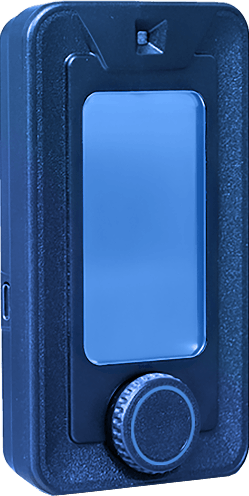
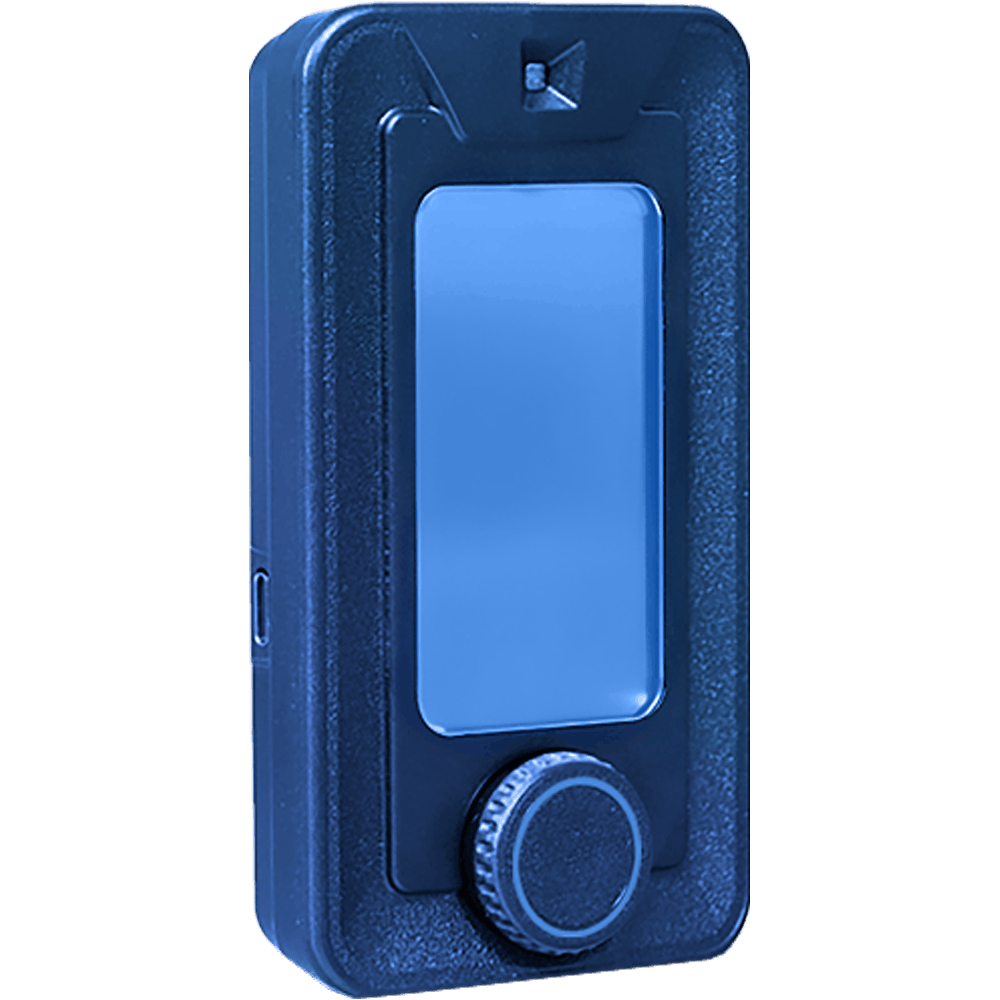
Bluefocus approaches blue-spectrum light from a different perspective. Instead of treating blue light as something that should always be eliminated, Bluefocus is designed around the biological relationship between light and alertness. The technology uses targeted light around 480 nm, near the wavelength to which the melanopsin system is particularly sensitive. The goal is straightforward: Deliver an intentional light signal during situations when you want to support wakefulness and alertness.
That might include:
- A long drive
- An overnight shift
- A demanding work session
- Studying
- An early morning
- A late night
- Travel and changing schedules
- Other situations requiring sustained attention
Bluefocus isn't intended to be something you turn on while lying in bed trying to fall asleep. That would miss the entire point. It's designed for the opposite situation: When you need to be awake.
More isn't necessarily better
Understanding the biological effects of light doesn't mean surrounding yourself with intense blue light every waking minute.
Light responses depend on multiple factors, including:
- Wavelength
- Intensity
- Duration
- Timing
- Previous light exposure
- Individual sensitivity
- Time of day
The relationship is much more sophisticated than: Blue = good or Blue = bad. That's why responsible light-based technology should consider not only the type of light being delivered, but also how and when it's used.
The same signal can have very different purposes
Morning sunlight can help tell your brain the day has begun. Bright light late at night can interfere with the biological transition toward sleep. Targeted light during a period when you need to remain awake may support alertness. All three statements can be true at the same time. The difference is timing.
So the next time you hear that you should “avoid blue light,” remember that the science is more interesting than the headline. Blue light isn't your enemy. It's a biological signal. And like many signals in the human body, understanding when to use it is what matters most.