June 2, 2026
How Light Tells Your Brain It’s Time to Be Awake
Why the light around you affects more than just what you can see.
When you think about light, you probably think about vision. Light helps you see your surroundings, read a screen and navigate the world around you. But your eyes do something else with light that most people never think about. They also help tell your brain what time of day it is and whether your body should be preparing for sleep or wakefulness.
That connection between light and alertness is one of the reasons stepping outside into bright daylight can make you feel noticeably more awake. And there is real biology behind it.
Your body has an internal clock
Your body operates on an approximately 24-hour cycle known as your circadian rhythm. This internal timing system influences when you naturally feel awake, when you begin getting sleepy, your body temperature, hormone production and many other biological processes. At the center of this system is a small area of the brain called the suprachiasmatic nucleus (SCN), often described as the body's master clock.
But your internal clock doesn't operate completely on its own. It constantly looks for signals from your environment to determine whether it is daytime or nighttime. And one of the most powerful signals is light.
The National Institute of General Medical Sciences notes that light and darkness are among the strongest influences on human circadian rhythms.
Your eyes don't just help you see
When light enters your eyes, some of it is processed by the visual system so you can see. But your eyes also contain specialized cells involved in what scientists call the non-visual effects of light. These pathways help communicate information about environmental light to areas of the brain involved in circadian timing, sleep and wakefulness. One important photopigment involved in this process is called melanopsin. Melanopsin-containing retinal cells are particularly sensitive to shorter wavelengths of visible light, including light in the blue portion of the spectrum. That means certain types of light can act as a biological signal, not simply illumination.
In simple terms:
Light reaches your eyes → your brain detects the light signal → your body's wake/sleep systems respond.
Why daylight helps us feel awake
For most of human history, there was a very obvious environmental pattern:
Bright light = daytime.
Darkness = nighttime.
Our biology evolved around that cycle.
During daylight hours, exposure to light helps reinforce signals associated with the biological day. When darkness arrives, the body's physiology begins shifting toward nighttime. One of the processes controlled by the brain's master clock is the production of melatonin, a hormone involved in preparing the body for sleep. As evening approaches and light levels fall, melatonin levels typically begin to rise. Light exposure can influence this process and the body's perception of biological day and night. This is also why the timing of light matters.
Light exposure during the morning, afternoon, evening and middle of the night doesn't necessarily produce identical effects.
Light can also have an immediate alerting effect
Light doesn't only influence your circadian rhythm over time. Research suggests it can also produce more immediate, or acute, effects on alertness. A systematic review examining 68 studies found evidence that light can affect alertness through factors including light intensity and spectral composition.
Another systematic review and meta-analysis found that shorter-wavelength light, particularly around 460–480 nm, produced significant alerting effects in several nighttime conditions. The magnitude and consistency of these effects depended on factors such as the time of day and the way alertness was measured.
Even the U.S. National Institute for Occupational Safety and Health includes increased light exposure among strategies that can help workers remain more alert, particularly during night shifts and periods of increased sleepiness.
So that feeling of becoming more awake when you walk into daylight isn't necessarily just psychological. Your brain is responding to information contained in the light around you.
Why this matters in modern life
There's one problem. Our lifestyles no longer consistently follow the natural light-dark cycle our biology evolved around. We drive through the night. We work overnight shifts. We spend entire days inside buildings. We cross multiple time zones within hours. We work late into the evening. And sometimes we need to remain mentally engaged at times when our biology is pushing strongly in the opposite direction.
This creates a mismatch between when we need to be alert and when our body naturally expects us to be awake. Night-shift workers are an obvious example. At 3:00 AM, you may still have several hours left in your shift, but your circadian system is approaching one of the strongest periods of biological sleepiness. The same problem can affect someone driving late at night, studying into the evening, working an unusually long day or adjusting to a new time zone. Circadian disruption can contribute to drowsiness, difficulty concentrating and impaired coordination.
Isn't blue light supposed to be bad?
This is where the conversation around blue light often becomes confusing. You've probably seen advice telling you to reduce blue light before bed. That advice and the alerting effects of light aren't contradictory.
Timing and purpose matter.
When you're preparing to sleep, strong light signals can be undesirable because you're trying to allow your body to transition toward nighttime. When you're trying to remain awake and alert, light can be useful for exactly the opposite reason. The better question isn't: "Is blue light good or bad?" It's: "When am I exposing myself to light, and what am I trying to accomplish?" You wouldn't drink coffee immediately before trying to fall asleep. That doesn't mean caffeine is inherently bad. Light should be thought about in a similarly contextual way.
Where Bluefocus comes in
Bluefocus is built around a simple biological principle:
Light doesn't only help you see. It can also influence the systems involved in wakefulness and alertness.
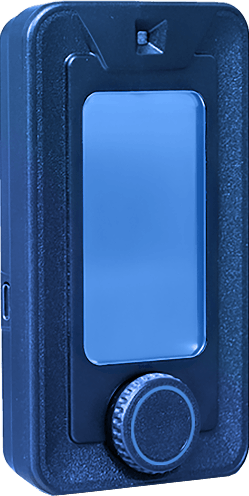
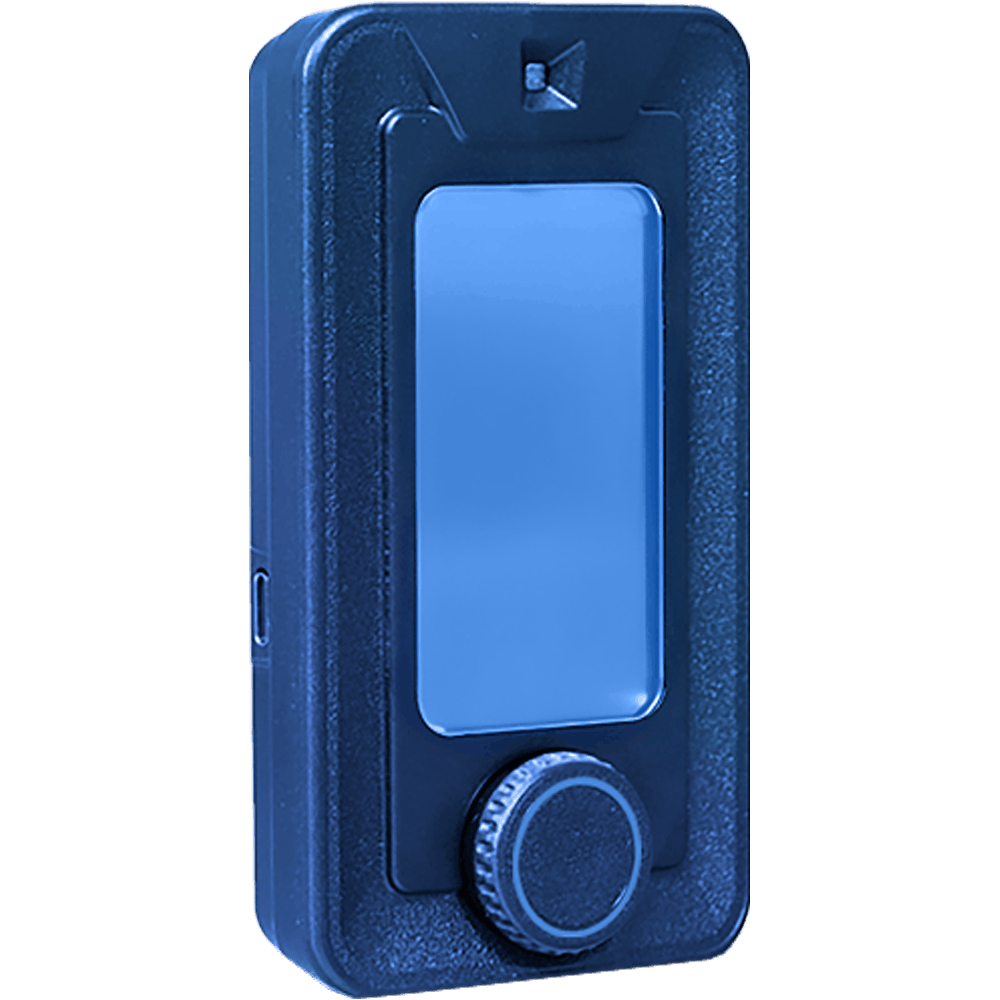
Instead of relying exclusively on another cup of coffee or energy drink when you need to remain engaged, Bluefocus provides a light-based approach designed around the body's natural response to light. It's particularly relevant during situations where maintaining alertness can become challenging, including:
- Long work sessions
- Night driving
- Shift work
- Early mornings
- Late nights
- Studying
- Extended periods of concentration
- Travel and disrupted schedules
It represents a different way of thinking about alertness: working with a biological pathway your body already uses every day.
Light isn't a replacement for sleep
There is an important distinction. No alertness strategy eliminates the body's need for sleep. If you're severely sleep deprived, the solution is ultimately sleep. Fatigue can reduce attention, slow reaction time, affect short-term memory and impair judgment. If you are dangerously sleepy, particularly while driving or operating equipment, the appropriate response is to stop and rest. Bluefocus should therefore be viewed as a tool for supporting alertness, not as permission to ignore sleep or push through dangerous levels of fatigue.
Your environment is already influencing how awake you feel
Whether you realize it or not, your brain is constantly interpreting the light around you. Morning sunlight. A dark room. A brightly lit office. The fading light of evening. These are more than visual experiences. They're biological signals. Understanding that connection changes the way we think about alertness. Because sometimes feeling more awake isn't simply about consuming another stimulant. Sometimes it's about giving your brain one of the signals it has been responding to for thousands of years: Light.